
Optimal Bedroom Temperature for Deep Sleep and Longevity
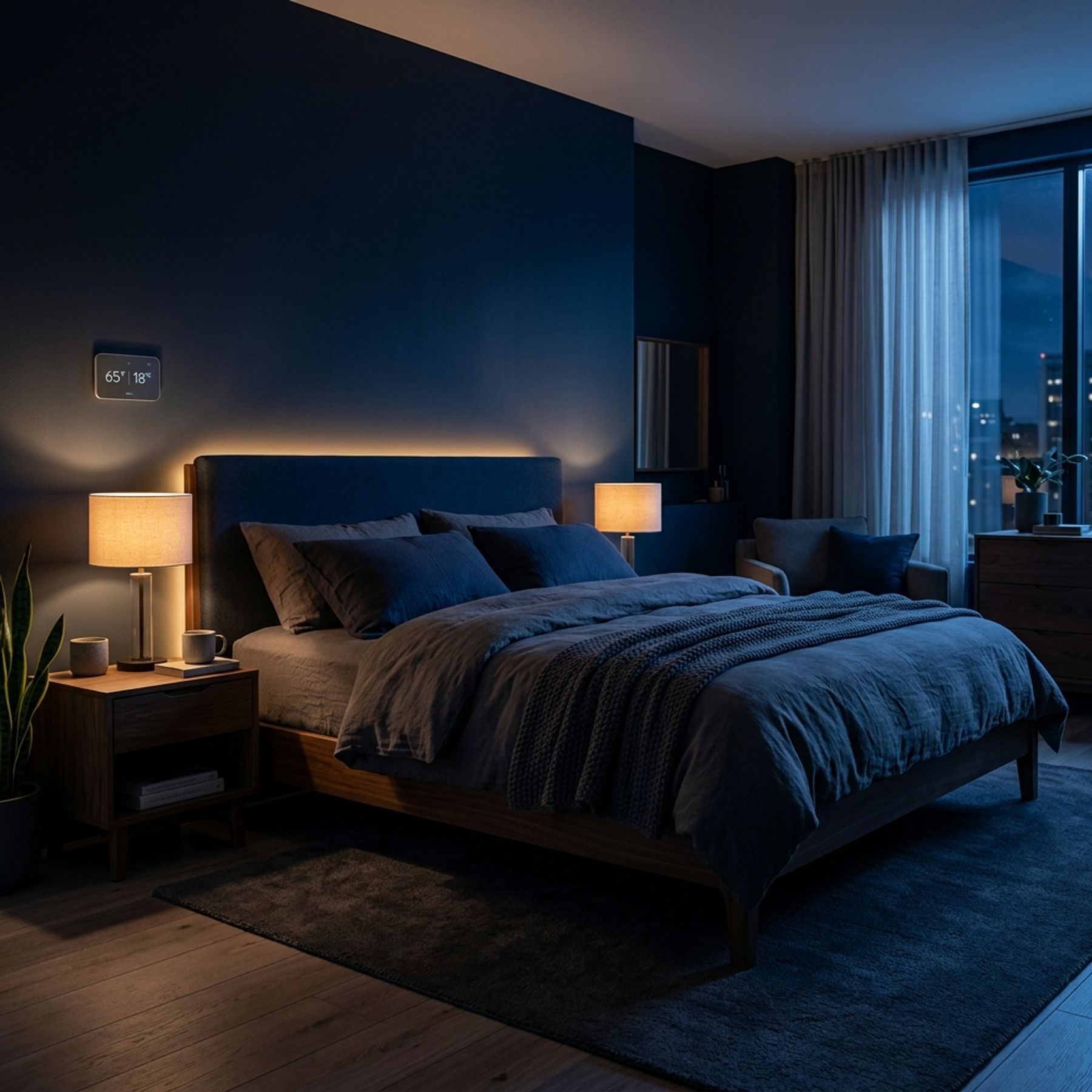
A cooler bedroom environment supports the body's natural circadian temperature dip.
Disclaimer: Modern Med Life is an independent publication. This article is for informational and educational purposes only. Modern Med Life is not affiliated with, sponsored by, or associated with Dr. Peter Attia, his book Outlive, the Early Medical clinic, or any related entity. Dr. Attia does not endorse, recommend, or have any commercial association with the third-party lab providers, services, or product links mentioned in this article.
For most adults, the optimal bedroom temperature for bedtime is between 60°F and 67°F (15.6°C to 19.4°C). While individual comfort thresholds can vary slightly based on age, metabolism, and bedding, sleep physiology strongly favors a cooler ambient environment to assist your body's natural nocturnal thermoregulation.
Why Bedroom Temperature is a Critical Physiological Lever
Most people view bedroom temperature as a matter of simple comfort. In reality, it is a powerful physiological lever for optimizing deep sleep phases, overall sleep duration, and cardiovascular recovery. When the room is too warm, you block critical mechanisms that regulate sleep architecture.
The Physiology of Temperature and Sleep
To understand why cooler temperatures are superior, we must look at how the body manages energy and circadian rhythms:
- The Circadian Core Temperature Dip: Approximately 2 hours before your typical bedtime, your body begins dumping heat, resulting in a natural drop in core body temperature. This dip is heavily mediated by melatonin, which promotes vasodilation (dilating blood vessels in your hands and feet to release heat). An environment that is too warm prevents this heat transfer, delaying sleep onset and fragmenting sleep architecture.
- Thermoregulatory Paralysis during REM Sleep: During Rapid Eye Movement (REM) sleep, your body's active thermoregulation (such as sweating or shivering) is down-regulated. If the ambient room temperature is too high, your body cannot easily adjust, causing brief micro-arousals or a complete exit from REM sleep to restore thermoregulation.
What the Scientific Literature Says
Recent clinical research highlights that environmental temperature has a direct, quantifiable impact on both sleep duration and long-term health outcomes:
- Sleep Loss and Warm Temperatures: A 2025 meta-analysis evaluated the impact of indoor bedroom temperatures on older adults. The researchers found that when bedroom temperatures rose from a comfortable 71.6°F (22°C) to an uncomfortably warm 86°F (30°C), sleep duration was reduced by a full hour (Innov Aging, 2025).
- The Longevity Connection: The same 2025 meta-analysis confirmed that short sleep duration (less than 6 to 7 hours) is strongly linked to health risks, demonstrating a pooled relative risk (RR) for all-cause mortality of 1.08 in older adults (Innov Aging, 2025).
- Protecting Sleep Regularity: Medicine 3.0 places a heavy emphasis on sleep consistency. A massive prospective cohort study published in Sleep (n = 60,977) found that day-to-day sleep regularity is actually a stronger predictor of mortality than sleep duration. Higher sleep regularity was associated with a 20% to 48% lower risk of all-cause mortality (Sleep, 2023). Controlling your bedroom temperature is one of the easiest ways to prevent environmental wake-ups, thereby protecting your sleep regularity index.
If you are tracking other key biomarkers of aging and recovery, check out our Affordable DIY Health Tests Guide to monitor metrics like ApoB and HbA1c out-of-pocket.
Sleep Temperature Optimization Matrix
| Sleep Component | Optimal Range | Physiological Mechanism |
|---|---|---|
| Bedroom Air | 60°F–67°F (15.6°C–19.4°C) | Facilitates the core body temperature drop required for deep sleep |
| Pre-bed Bath/Shower | Warm, ~104°F (40°C) | Increases distal blood flow, causing rapid heat dumping afterward |
| Bedding & Mattress | Breathable / Grid designs | Prevents micro-climate heat buildup (which is common with memory foam) |
Next Steps for Sleep Optimization
If you want to optimize your sleep temperature starting tonight, consider these actionable steps:
- Lower the Thermostat: Set your HVAC system to target 65°F (18°C) about an hour before you plan to go to sleep.
- Take a Warm Bath or Shower 90 Minutes Before Bed: This paradoxical trick works by drawing blood to the surface of your skin, allowing your core temperature to plummet rapidly once you step out.
- Evaluate Your Bedding: Swap out heavy synthetic blankets for natural fibers like cotton, linen, or bamboo, and opt for mattresses designed to dissipate heat.
- Consider a Grid Mattress: Modern grid mattresses have been shown to improve sleep quality by preventing micro-climate heat buildup, which is a common issue with traditional memory foam (Health Sci Rep, 2024).
For severe or persistent sleep issues, it is always recommended to consult with a qualified Medicine 3.0 practitioner. You can use our Medicine 3.0 Doctors Directory to find forward-thinking physicians near you.
Take Charge of Your Longevity Protocol
If you are looking to build a comprehensive sleep, exercise, or biomarker protocol, explore our Medicine 3.0 AI Longevity Assistant. This free, literature-grounded companion helps you analyze longevity research, prepare questions for your doctor, and explore evidence-based health optimization strategies.
- 100% Private: No personal health data is stored.
- Evidence-Grounded: Drawing only from high-impact, peer-reviewed medical publications.
- Proactive Education: Get personalized insights on sleep, VO2 max, lipids, and metabolic health.
Start Using the Longevity Assistant
References
- A Meta Analysis of Indoor Temperature Impacts on Sleep Duration, Mortality Risk, and Economic Costs in Older Adults. Innov Aging. 2025. PMC12762501
- Sleep regularity is a stronger predictor of mortality risk than sleep duration: A prospective cohort study. Sleep. 2023. PMC10782501
- Effectiveness of a grid mattress on adults' sleep quality and health: A quasi-experimental intervention study. Health Sci Rep. 2024. PMC11025355