
How to Improve VO2 Max: Evidence-Based Guide
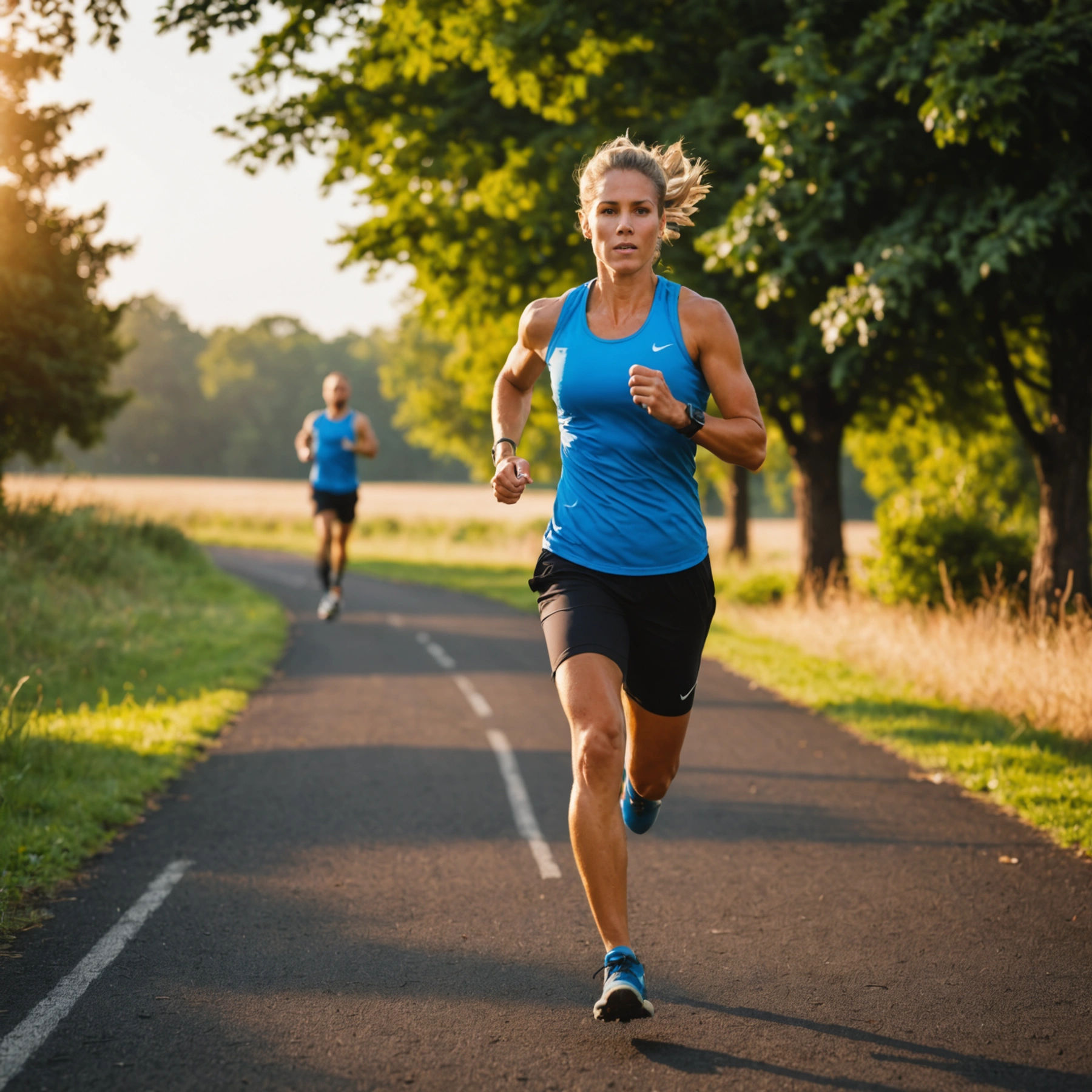
HIIT is the most evidence-backed training modality for rapidly improving VO2 Max.
What is VO2 Max?
VO2 Max, or maximal oxygen uptake, measures the maximum amount of oxygen your body can use during intense exercise. Think of it as the ceiling of your aerobic engine — it dictates how efficiently your body takes in, transports, and utilizes oxygen to fuel your muscles. A higher VO2 Max means greater endurance capacity and, critically, a significantly longer healthspan.
Whether you're a seasoned athlete or just beginning your fitness journey, improving your VO2 Max is one of the highest-leverage investments you can make in your long-term health.
Why VO2 Max Is the Leading Predictor of Longevity
It's not just a fitness metric. A landmark meta-analysis published in the British Journal of Sports Medicine — analyzing data from over 20.9 million people across 199 cohort studies — found that cardiorespiratory fitness is "a strong and consistent predictor of morbidity and mortality among adults." Even small improvements, like upgrading from a sedentary to a brisk-walking lifestyle, produce measurable mortality benefits.
Dr. Peter Attia's Centenarian Decathlon framework makes this concrete: to remain functionally independent at age 90, you need to bank VO2 Max now, because it declines more than 20% per decade after age 70. You cannot contribute to this account later.
Key insight: A 45-year-old with an elite VO2 Max will likely still clear the functional independence threshold at age 85. A 45-year-old with an average VO2 Max may not.
See where you stand with the Fitness Age Calculator — it calculates your VO2 Max percentile relative to your age and sex.
The Science: What Actually Improves VO2 Max
Research from leading journals points to four primary training modalities:
- American College of Sports Medicine (ACSM): HIIT can significantly improve cardiovascular fitness in less time than traditional endurance training.
- American Physiological Society: Endurance training drives physiological adaptations — increased capillary density, enhanced mitochondrial function, and improved cardiac output — that directly raise VO2 Max.
- Sports Medicine (journal): Combining strength training with aerobic work optimizes VO2 Max gains beyond aerobic training alone.
- American Journal of Sports Medicine: Individualized programs calibrated to a person's baseline produce the best results.
High-Intensity Interval Training (HIIT): The Top Protocol
HIIT — alternating between short bursts of near-maximal effort and recovery — consistently outperforms steady-state cardio for VO2 Max gains. Here's why it works:
- Mitochondrial Enhancement: HIIT stimulates mitochondrial biogenesis — more mitochondria means a greater ability to use oxygen.
- Cardiac Output Boost: Repeated high-intensity efforts strengthen the heart, increasing stroke volume and oxygen delivery to muscles.
- Blood Volume Expansion: HIIT increases total blood and red blood cell volume, further enhancing oxygen transport capacity.
Beginner HIIT Workout
| Phase | Duration | Description |
|---|---|---|
| Warm-up | 5 min | Light cardio (jogging in place, jumping jacks) |
| HIIT Intervals | 4–6 rounds | 30 sec high-intensity (burpees, mountain climbers) / 30 sec rest |
| Cool-down | 5 min | Stretching |
Advanced Long-Interval HIIT
| Phase | Duration | Description |
|---|---|---|
| Warm-up | 5 min at 8 km/h | Light running |
| HIIT Intervals | 10 × 1 min | 90% of blood lactate accumulation velocity / 1 min passive recovery. Ensure 90% HRmax for final 5 reps. |
| Cool-down | 5 min | Light jogging and stretching |
Advanced Short-Burst Cycling (4-Second Protocol)
A 2021 study in Medicine & Science in Sports & Exercise showed that just 4-second all-out cycling sprints — with adequate rest — significantly increased peak VO2 and total blood volume.
| Phase | Duration | Description |
|---|---|---|
| Warm-up | 5 min | Easy cycling |
| HIIT Intervals | 30 × 4 sec | All-out sprints at max anaerobic power / 30 sec recovery (reduce to 15 sec after 4 weeks) |
| Cool-down | 5 min | Easy cycling and stretching |
Note: Use a heart rate monitor for advanced protocols, especially to confirm you're hitting 90% HRmax in the final intervals.
Additional Training Strategies
HIIT is the headline act, but these methods compound the gains:
- Continuous Endurance Training: Sustained moderate-intensity work (running, cycling, swimming) for 30–60 min builds aerobic base. Even brisk walking at ~150 min/week produces measurable cardiovascular improvements.
- Strength Training: Resistance training 2–3x/week builds muscle, which consumes more oxygen at rest and supports aerobic performance. Exercises targeting posterior chain (deadlifts, rows) and legs are particularly valuable.
- Cross-Training: Rotating between running, cycling, and swimming engages different muscle groups, prevents adaptation plateaus, and reduces overuse injury risk.
6-Week Progressive Training Plan
This plan blends all four modalities with progressive overload across three phases.
Weeks 1–2: Building the Foundation
Monday — HIIT
- Warm-up: 10 min light jog
- 8–10 rounds: 30 sec sprint / 90 sec recovery jog
- Cool-down: 10 min walk + stretch
Tuesday — Strength
- Squats: 3 × 12 | Push-ups: 3 × 10–12 | Lunges: 3 × 12/leg | Planks: 3 × 30–60 sec
Wednesday — Rest or light activity (walking, yoga, stretching)
Thursday — Continuous Endurance
- 10 min warm-up jog → 30–45 min steady-state run → 10 min cool-down
Friday — Cross-Training
- 45–60 min cycling or swimming at moderate, sustainable pace
Saturday — HIIT
- 10 min warm-up → 10–12 rounds: 30 sec sprint / 90 sec recovery → 10 min cool-down
Sunday — Rest or light activity
Weeks 3–4: Increasing Intensity
Monday — HIIT: Increase to 40 sec sprint / 80 sec recovery, 8–10 rounds
Tuesday — Strength:
- Deadlifts: 3 × 10 | Pull-ups (or assisted): 3 × 8–10 | Step-ups: 3 × 12/leg | Russian Twists: 3 × 20
Wednesday — Rest
Thursday — Continuous Endurance: 35–50 min steady-state
Friday — Cross-Training: Rowing or elliptical, 45–60 min
Saturday — HIIT: 40 sec sprint / 80 sec recovery, 10–12 rounds
Sunday — Rest
Weeks 5–6: Peak Training
Monday — HIIT: Increase to 50 sec sprint / 70 sec recovery, 8–10 rounds
Tuesday — Strength:
- Bench Press: 3 × 10 | Bent Over Rows: 3 × 10 | Bulgarian Split Squats: 3 × 12/leg | Bicycle Crunches: 3 × 20
Wednesday — Rest
Thursday — Continuous Endurance: 40–60 min steady-state
Friday — Cross-Training: Swimming or cycling, 45–60 min
Saturday — HIIT: 50 sec sprint / 70 sec recovery, 10–12 rounds
Sunday — Rest
Tips for Success
- Progress Gradually: Start at your current fitness level and add intensity systematically.
- Listen to Your Body: Rest when you feel joint pain or excessive fatigue — overtraining suppresses VO2 Max gains.
- Hydration: Dehydration impairs cardiovascular function and can directly reduce peak VO2. Drink before, during, and after.
- Sleep: 7–9 hours of quality sleep is non-negotiable for recovery and adaptation. Insufficient sleep measurably impairs training progress.
- Nutrition: Whole foods, lean proteins, complex carbohydrates, and healthy fats support training and recovery. Avoid heavily processed foods before and after workouts.
- Track It: A fitness tracker or training journal lets you see your VO2 Max percentile trend over weeks and months.
Lifestyle Factors That Amplify Training Gains
Nutrition
A nutrient-dense diet directly supports training output and recovery. Focus on:
- Adequate protein (to preserve and build muscle supporting aerobic performance)
- Complex carbohydrates (the primary fuel for aerobic exercise)
- Anti-inflammatory foods (berries, fatty fish, leafy greens) to reduce recovery time
For personalized protein targets, use the Protein Calculator.
Sleep & Recovery
Adequate rest is where adaptation happens. Studies link insufficient sleep to impaired VO2 Max training response — growth hormone and testosterone are primarily secreted during deep sleep, directly supporting cardiorespiratory adaptation.
Medicine 3.0: The Personalized VO2 Max Approach
"The goal of Medicine 3.0 is to add both quantity and quality to life — and VO2 Max is one of the most modifiable determinants of both." — Dr. Peter Attia
Medicine 3.0 physicians move beyond generic recommendations:
- Personalized Exercise Prescriptions: Wearable data, genetic testing, and VO2 Max testing inform a training plan calibrated to your specific physiology — your optimal training zones, recovery windows, and injury risk factors.
- Precision Nutrition Guidance: Understanding your microbiome composition and metabolic response enables dietary recommendations that maximize nutrient absorption for your workouts.
- Advanced Biomarker Monitoring: Inflammatory markers like CRP and IL-6 can covertly suppress VO2 Max gains. A Medicine 3.0 physician identifies and addresses these before they become barriers.
Looking for a doctor who takes this approach? Use the Medicine 3.0 Doctor Directory.
The Gut Microbiome & VO2 Max: An Emerging Frontier
Recent research has begun linking gut microbiome composition directly to exercise performance — a connection that's reshaping how longevity-focused physicians approach fitness optimization.
How Your Gut Affects Aerobic Capacity
- Energy Production: Certain gut bacteria break down complex carbohydrates and produce short-chain fatty acids (SCFAs), a key fuel source for muscles during sustained exercise.
- Inflammation Regulation: Gut dysbiosis (microbial imbalance) drives systemic inflammation that may directly blunt VO2 Max gains.
- Muscle Recovery: Emerging evidence suggests gut bacteria influence muscle protein synthesis and post-exercise recovery speed.
Supporting Your Microbiome
- Fiber-rich diet: Diverse fruits, vegetables, legumes, and whole grains feed beneficial bacteria.
- Probiotic and prebiotic foods: Yogurt, kefir, fermented vegetables, and prebiotic-rich foods (garlic, onions, oats) support microbial diversity.
- Limit processed foods and added sugars: These disrupt microbial balance and can indirectly suppress aerobic performance.
Use Our Longevity Tools
Your VO2 Max doesn't exist in isolation — it's one input into a broader longevity picture:
- Fitness Age Calculator — Calculate your current VO2 Max-based fitness age vs. chronological age
- Centenarian Decathlon Calculator — See the exact VO2 Max target you need today to be functionally independent at age 90
- Medicine 3.0 Doctors — Find a longevity physician who can order a clinical VO2 Max test and build a personalized training plan
References
- Lang JJ, Prince SA, Merucci K, et al. Cardiorespiratory fitness is a strong and consistent predictor of morbidity and mortality among adults: an overview of meta-analyses representing over 20.9 million observations from 199 unique cohort studies. British Journal of Sports Medicine 2024;58:556–566.
- Satiroglu R, Lalande S, Hong S, Nagel MJ, Coyle EF. Four-Second Power Cycling Training Increases Maximal Anaerobic Power, Peak Oxygen Consumption, and Total Blood Volume. Medicine & Science in Sports & Exercise 53(12):2536–2542, 2021.
- Buchheit M, Laursen PB. High-Intensity Interval Training, Solutions to the Programming Puzzle: Part I: Cardiopulmonary Emphasis. Sports Medicine 43(5):313–338, 2013.
- Helgerud J, et al. Aerobic High-Intensity Intervals Improve V̇O2max More Than Moderate Training. Medicine & Science in Sports & Exercise 39(4):665–671, 2007.
- Little JP, et al. A Practical Model of Low-Volume High-Intensity Interval Training Induces Mitochondrial Biogenesis in Human Skeletal Muscle. The Journal of Physiology 588(6):1011–1022, 2010.
- Mandić M, et al. Improvements in Maximal Oxygen Uptake After Sprint-Interval Training Coincide with Increases in Central Hemodynamic Factors. Medicine & Science in Sports & Exercise 53(9):1972–80, 2021.
- American College of Sports Medicine. High-Intensity Interval Training (HIIT) for Cardiovascular Fitness. Medicine & Science in Sports & Exercise, 2020.
- American Physiological Society. Physiological Adaptations to Endurance Training. Journal of Applied Physiology, 2019.
- Yun S, et al. Gut microbiome related to metabolic diseases after moderate-to-vigorous intensity exercise. Journal of Exercise Science & Fitness 22:375–382, 2024.
- Olivo G, et al. Higher VO2max Is Associated with Thicker Cortex and Lower Grey Matter Blood Flow in Older Adults. Scientific Reports 11(1), 2021.